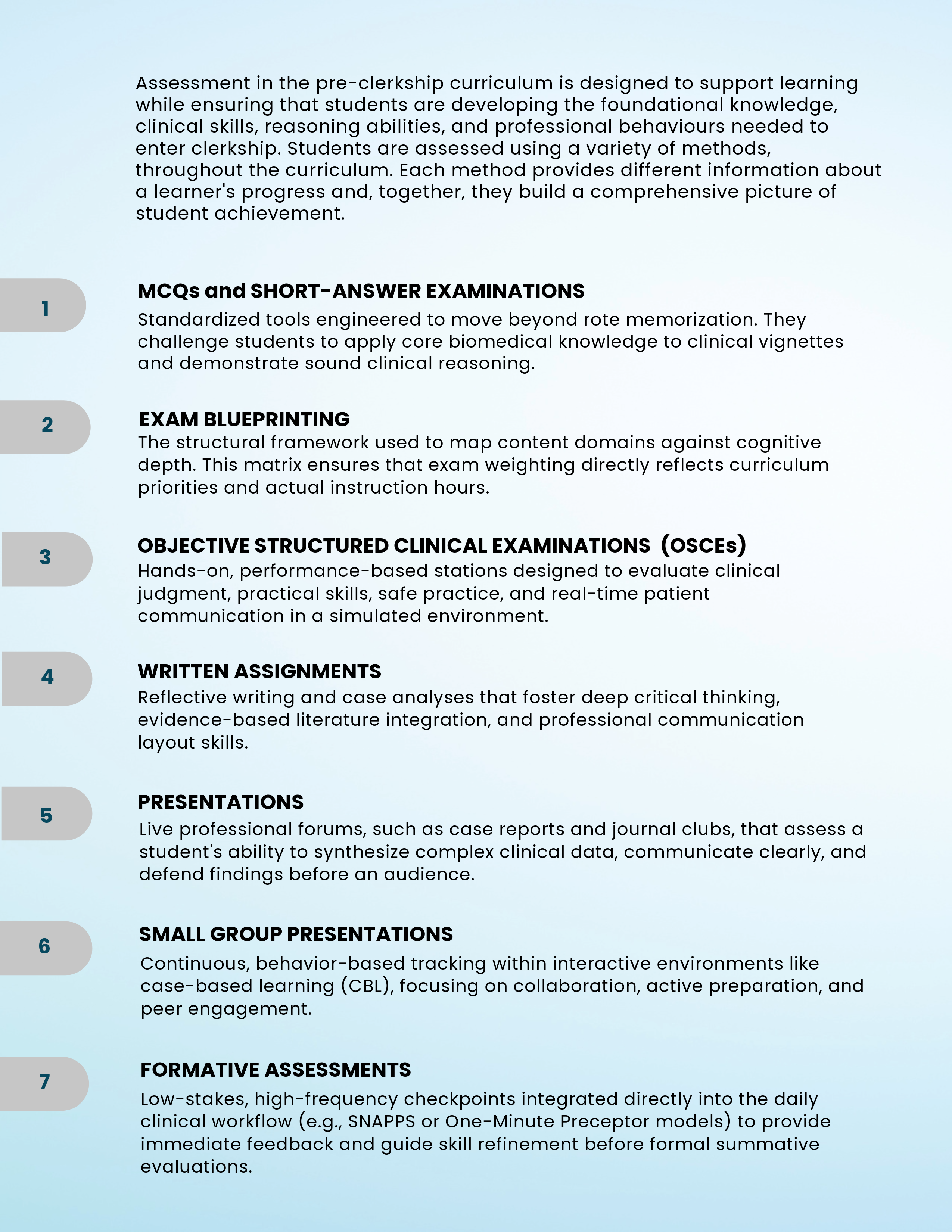
Assessment in the pre-clerkship curriculum is designed to support learning while ensuring that students are developing the foundational knowledge, clinical skills, reasoning abilities, and professional behaviours needed to enter clerkship. Students are assessed using a variety of methods, including multiple-choice and short-answer examinations, Objective Structured Clinical Examinations (OSCEs), written assignments, presentations, participation in small-group learning, and formative assessments throughout the curriculum. Each assessment method provides different information about a learner's progress and, together, they build a comprehensive picture of student achievement.
As a pre-clerkship teacher, your role is to create learning experiences that prepare students for these assessments while providing ongoing coaching and feedback when you can. Whether you are leading a classroom session, facilitating a tutorial, teaching clinical skills, or working with students in simulation or early clinical experiences, your observations help learners understand what they are doing well and where they can improve. Informal feedback during learning activities is often just as valuable as formal assessment because it allows students to refine their skills before they are evaluated.
Principles of Effective Assessment
- Aligned with the learning objectives – Assess what students are expected to learn during the session or course.
- Developmental – Focused on helping students build competence over time.
- Fair and transparent – Expectations and assessment criteria are clear and consistently applied.
- Timely – Feedback is provided while learners can still apply it to future learning.
- Supportive of learning – Assessment is used to guide improvement, not simply assign grades.